Synchronizing Real-Time Financial Transactions with Multiplayer Table Dynamics on Digital Platforms
Avery Hansen · Oct 3, 2026

Synchronizing Real-Time Financial Transactions with Multiplayer Table Dynamics on Digital Platforms
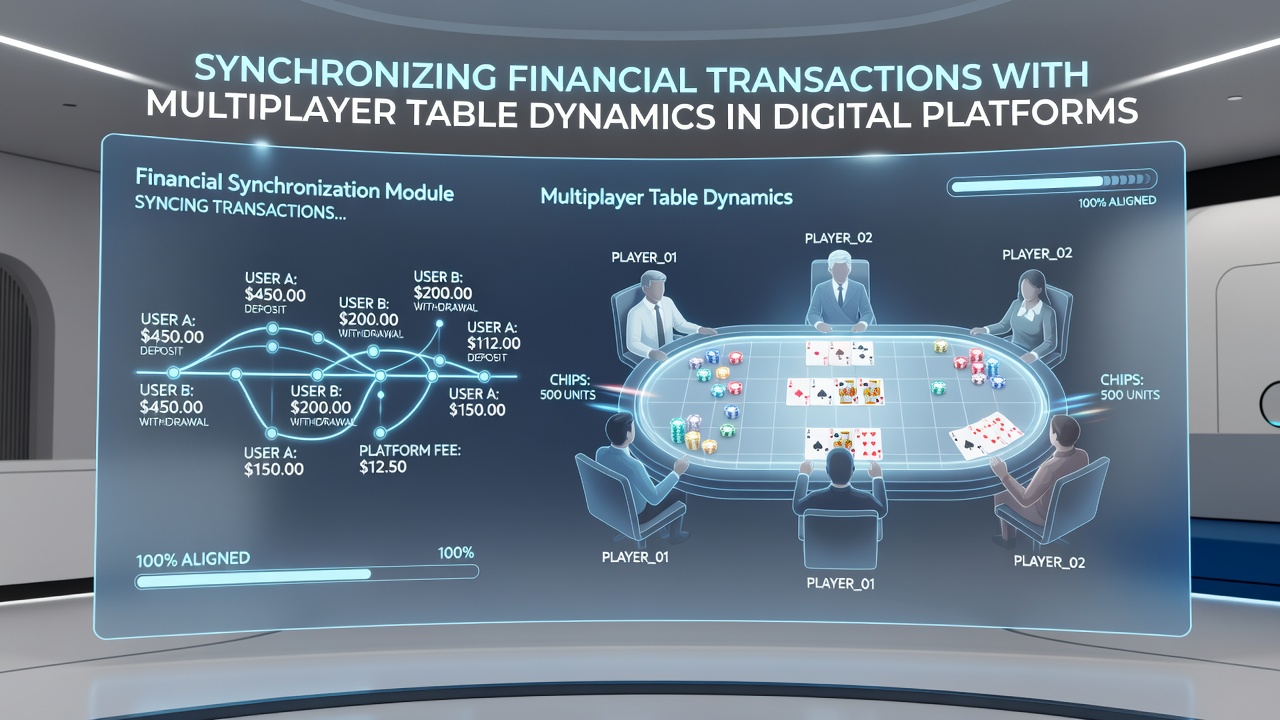
Digital platforms that host multiplayer table games rely on precise coordination between financial transaction systems and the ongoing flow of game states, where bets, payouts, and player actions must align without delay or discrepancy. This synchronization ensures that each round proceeds only after confirmed stakes register in the central ledger while preventing any post-round modifications. Researchers at institutions studying distributed systems have documented how platforms achieve this through layered server architectures that process inputs from multiple participants simultaneously.
Core Mechanisms Behind Transaction and Game State Alignment
Engineers design these systems around event-driven architectures where each player decision triggers a sequence of validations across payment gateways and game engines. Data packets carrying bet amounts travel through encrypted channels to match the current table state before the next action phase begins. Studies from the Gaming Standards Association indicate that timestamp synchronization protocols reduce desync incidents by aligning clocks across distributed nodes to within milliseconds. Observers note that platforms often incorporate message queuing services to handle peak loads during high-traffic periods when dozens of tables operate concurrently.
Security layers add another dimension because transaction records must remain immutable once a round concludes. Cryptographic hashing chains link each financial event to its corresponding game outcome, creating an auditable trail that regulators in various jurisdictions review during compliance checks. Those who have examined platform codebases report that rollback mechanisms activate only under specific fault conditions, such as network partitions, and they restore consistency without altering settled outcomes.
Challenges in Maintaining Consistency Across Global User Bases
Latency variations across regions create ongoing hurdles, particularly when players connect from areas with differing network infrastructures. Platforms deploy edge servers that cache partial game states locally while routing critical transaction confirmations through central hubs. Figures from industry reports compiled by the International Association of Gaming Regulators reveal that average round completion times have decreased as these distributed networks mature. Yet packet loss or sudden spikes in concurrent users can still disrupt the delicate balance between incoming deposits and table updates.
Regulatory requirements in multiple countries further shape these technical choices. Platforms must demonstrate that withdrawal requests cannot execute until the associated game round reaches final resolution. Canadian provincial gaming authorities have published guidelines emphasizing real-time reconciliation between account balances and active table positions. Experts who analyze these frameworks point out that cross-border operations often adopt modular compliance engines that adapt to local rules without rebuilding core synchronization logic.
Developments Observed Through October 2026
By October 2026 several platforms had integrated advanced consensus algorithms drawn from blockchain research to handle transaction ordering during intense multiplayer sessions. These updates allow independent verification of bet sequences even when multiple regional servers participate in state management. Reports from academic groups at technical universities highlight performance gains measured in reduced dispute rates following the rollout of such protocols.
Additional tools for monitoring table dynamics now include predictive analytics that flag potential synchronization lags before they affect player experience. Data collected across thousands of sessions shows that early detection systems cut intervention times substantially. Industry organizations continue to track how these refinements interact with emerging payment methods that demand near-instant settlement.
Integration Patterns Used by Established Platforms
Many operators follow a publish-subscribe model where the game engine publishes state changes and the financial module subscribes to relevant events. This separation permits independent scaling of payment processing during promotional periods without touching the core table logic. Those who have reviewed deployment logs note that container orchestration platforms help maintain uptime while updates to either component occur.
Case examples from North American and European operators illustrate gradual migration from monolithic designs to microservices that isolate transaction handling. Each service communicates through well-defined APIs that enforce strict ordering guarantees. Research papers presented at systems conferences describe how these transitions lowered error propagation when one module experiences temporary overload.
Conclusion
Effective synchronization of financial transactions with multiplayer table dynamics rests on coordinated engineering practices that span networking, cryptography, and regulatory compliance. Platforms continue to refine these systems in response to growing user volumes and evolving technical standards. Continued examination by independent researchers and regulatory bodies supplies the data needed to assess progress across different regions.